Solder paste production process in detail
The production process for solder paste is a complex process involving several steps designed to ensure the production of high-quality products for use in surface mount technology (SMT) in the electronics manufacturing industry. The following is the detailed production process:
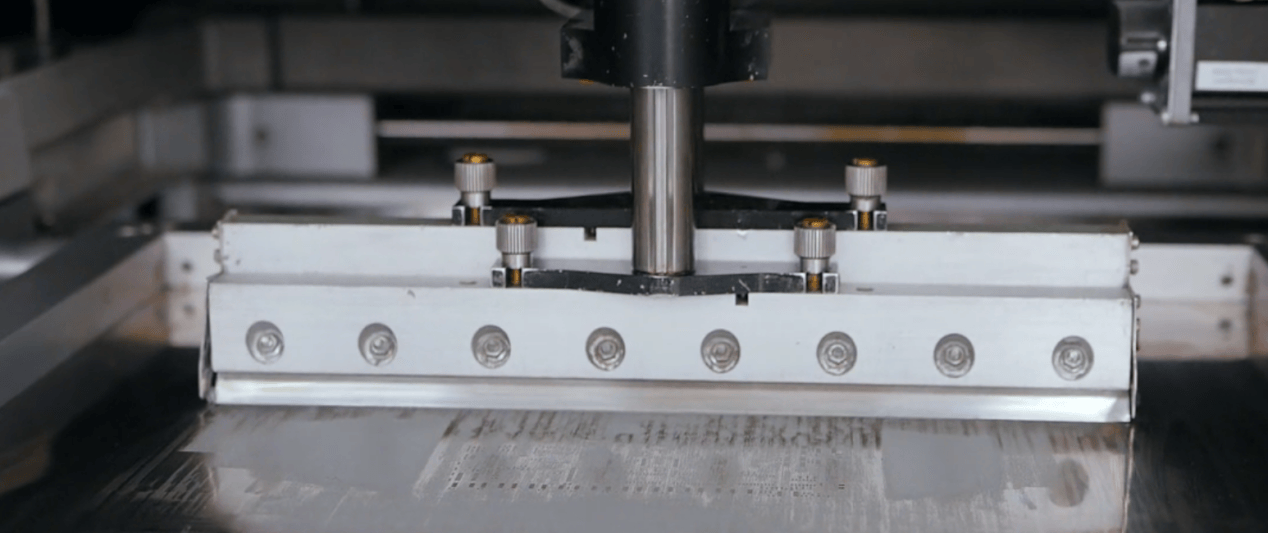
1. Raw material preparation: Preparation of the main raw materials required for solder paste production, including tin powder, resin and flux. Tin powder is the main component of solder paste, and its quality and proportion will directly affect the performance of the paste. Resin is used as an adhesive to bind the tin powder and flux together to form a homogeneous mixture. Flux is used to promote the soldering process of wetting, tinning, de-oxidizing and other processes.
2. Mixing: The prepared raw materials are put into the mixer according to a certain proportion for mixing. This process needs to ensure that all the raw materials are well mixed to ensure the performance and quality of the solder paste.
3. Filtering and screening: After mixing and stirring the solder paste needs to be filtered and screened to remove impurities and larger particles. This process can be carried out using a screen or sieve to ensure the purity and fineness of the paste.
4. Quality Inspection: The quality inspection of the produced solder paste includes appearance inspection, viscosity test, soldering performance test, and so on. This process can ensure that the quality of the solder paste meets the production requirements, to ensure the stability and reliability of the subsequent use of the process.
5. Packaging and storage: After quality inspection, the solder paste can be packaged and stored. Packaging materials need to meet the relevant standards to ensure that the solder paste in the storage and transportation process will not be contaminated or damaged. The storage environment also needs to be controlled
within the appropriate temperature and humidity range to maintain the performance and quality of the solder paste.
It is important to note that the production process of solder paste requires strict control of the parameters and conditions of each step to ensure that the solder paste produced has stable performance and quality. Selection of appropriate alloys, such as Sn-Pb or lead-free alloys (e.g. Sn-Ag-Cu), determines the formulation according to application needs and soldering requirements. It also needs to be adjusted and optimized according to specific product requirements and customer needs. Here I briefly introduce the well-known solder paste brand Fuyinda solder paste production process its unique research and development of liquid phase molding powder technology, the technology uses the principle of ultrasonic cavitation effect, can be used for T6 (5 ~ 15μm) above the preparation of ultra-micro solder powder, and has achieved large-scale mass production. Liquid phase molding technology through the liquid metal in another high-temperature liquid medium, the use of high-speed shear or high-frequency ultrasonic energy to refine the liquid metal into tiny particles, suspended in the liquid medium, and then cooled and solidified into a spherical powder. The solder pastes produced by this technology have excellent process properties, including excellent printability, release and transfer, shape and stability retention, and sufficient and uniform print volume. In addition, Fuyingda's solder pastes have stable viscosity and thixotropy coefficients, can be printed continuously for 8 hours, and are available in both no-rinse and aqueous cleaning methods.
Because of this technology, Fitech is the only manufacturer of electronic packaging materials in the world that can manufacture T2-T10 full-size ultra-micro-alloy solder powders, and the liquid phase molding technology has also obtained national patent protection, and has demonstrated excellent performance in practical applications. Welcome to communicate and negotiate!


评论
发表评论