In-depth analysis of solder paste viscosity standards
I. Core Definition and Unit System of Solder Paste Viscosity
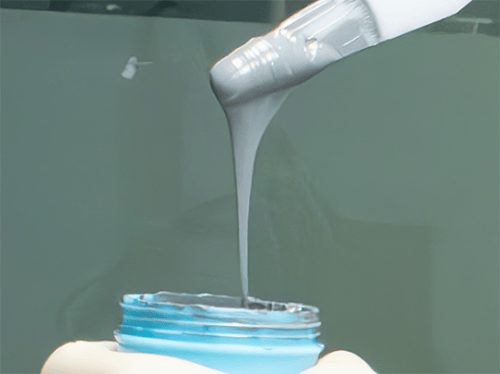
Solder paste viscosity is a key indicator of its internal friction, which directly affects printing performance and solder quality.Common units include:
Pa-s (Pascal seconds): International System of Units, 1 Pa-s = 1000 mPa-s.
kcp (thousand centipoise): the industry commonly used units, 1 kcp = 1000 mPa-s = 1Pa.S, IPC standard 60-140 kcp corresponds to 60-140 Pa-s.
cp (centipoise): 1 cp = 10 mPa-s for low viscosity scenarios.
Standard range differences:
General standard: 150-250 mPa-s (for general printing).
IPC Standard: IPC-TM-650 specifies viscosity of 200-300 Pa-s at 25°C.
Wide range: 20-300 Pa-s (covers different process requirements).
II. the test method and equipment selection
Test methods need to be selected according to the accuracy requirements and scenarios:
Rotational Viscometer Method (Mainstream)
Principle: Calculate viscosity by measuring rotational resistance to simulate printing shear rate.
Equipment: Malcom PCU, Brookfield type.
Steps:
The sample is left to stand at 25°C for 30 minutes to eliminate air bubbles.
Set rotational speed (e.g. 10rpm) and measure for 30 seconds.
High accuracy (error ±1%) but time consuming operation (15 minutes for a single run), suitable for laboratories.
Added details: When using a T-rotor, ensure that the rotor is immersed to a depth of 0.3-2.8 cm and that the temperature fluctuates ±0.25°C.
Outflow Cup Method (Rapid Screening)
Principle: Conversion of viscosity by outflow time, suitable for low viscosity scenarios.
Equipment: Tu-4 cup (5 mm pore size).
Steps:
Fill with solder paste, scrape the surface and record the run-out time.
Formula conversion: η=K×t (K is the instrument constant).
Advantages: low cost of equipment ($500-1000), simple operation (<5 minutes).
Disadvantages: low precision (error ±5%), unable to simulate the shear rate.
Rheometer test method (thixotropic analysis)
Principle: Flat plate/vertex shear solder paste to measure thixotropic properties (Ti value, R value).
Key parameters:
Ti value (thixotropic index): 0.4-0.6 indicates moderate fluidity and rapid morphological changes under external force.
R value (viscosity recovery rate): close to 0 indicates good recovery, avoiding printing collapse.
Vibrating viscometer method (online monitoring)
Principle: Real-time calculation of viscosity by vibration frequency change.
Application: Continuous feeding presses with fast response time (<1 second).
Disadvantages: medium accuracy (error ±3%), thermostat required.
III. Industry standards and key parameters analysis
IPC J-STD-005A Standard
Physical properties: specified viscosity, density, metal particles (size, shape, distribution).
Chemical properties: degree of oxidation, impurity content (such as moisture, oxides).
Test methods: Viscometer, microscope, spectral analysis.
JIS-Z-3284 and JIS-Z-3197 standards
Viscosity test: Malcom viscometer, measured at 25°C.
Flux content: Calculated by gravimetric method, deviation ≤±0.5%.
Diffusivity test: Test tin-eating property, diffusion rate 70-80% is acceptable range.
Particle size: T4 (20-45 μm), T5 (15-25 μm), T6 (5-15 μm) to ensure printing stability.
Thixotropic index: Ti value 0.4-0.6, R value close to 0.
IV. the environmental factors and operating specifications
Temperature control: 25±0.5°C, humidity 30-60% RH to reduce external interference.
Sample processing:
Stand for 30 minutes to eliminate air bubbles.Avoid mixing air, stirring time 1-2 minutes.
Equipment Maintenance:
Clean the rotor and sample cup with ethanol after each test.
Calibrate the instrument regularly (e.g. Malcom PCU-205).
V. Viscosity impact on SMT process
Viscosity is too high:
Printing clogging, under the tin difficult.
Need to increase squeegee pressure, may lead to stencil deformation.
Viscosity is too low:
Collapse, tin beads or even tin phenomenon.
Increased risk of component displacement after printing.
VI. Suggestions for process optimisation
Select the viscosity according to the process:
High-speed printing: Select low viscosity solder paste (e.g. 100-150 mPa-s).
Precision components: Select high viscosity solder paste (e.g. 150-220 mPa-s).
Special environments: Select ultra-high viscosity pastes (e.g. >300 Pa-s, e.g. automotive/aerospace microbumps).
Monitor thixotropic properties:
Ti values of 0.4-0.6 and R-values close to 0 to ensure print stability.
Environmental control:
Workshop temperature 23-27°C, humidity RH 30-60%.
Keep solder paste refrigerated (0-5°C), return to temperature before use.
VII. Application Cases
Smartphone motherboard soldering:
Low viscosity solder paste (100-180 Pa-s) avoids short circuit between components.
Printing speed is increased by 30% and production cycle is shortened.
Automotive electronic components welding:
High viscosity solder paste (200-300 Pa-s) to cope with high temperature and high humidity environment.
Solder joint reliability increased by 50% and failure rate reduced to less than 0.1%.
Conclusion
Solder paste viscosity standards need to be combined with specific application scenarios, test methods and industry standards to make a comprehensive judgement.By accurately controlling the viscosity and thixotropic properties, SMT process yields can be significantly improved, and printing defects and soldering problems can be avoided.Manufacturers should establish a comprehensive quality management system and regularly test the performance of solder paste to meet the needs of the constantly upgrading process.


评论
发表评论